
Real EstateSoftwarefor Analysis.Financing.Management.Growth.
Real Estate Software, real estate investing software, and property management software for small landlords—together in one place to help you evaluate deals, track properties, and build wealth.
Make Smarter Investment Decisions
Estimate returns, model cash flow, and compare investment scenarios using practical tools.
Interactive Investment Calculators
All results are estimates based on your inputs. Market data and lender quotes are not live.
Powerful Real Estate Investing Software for Serious Investors
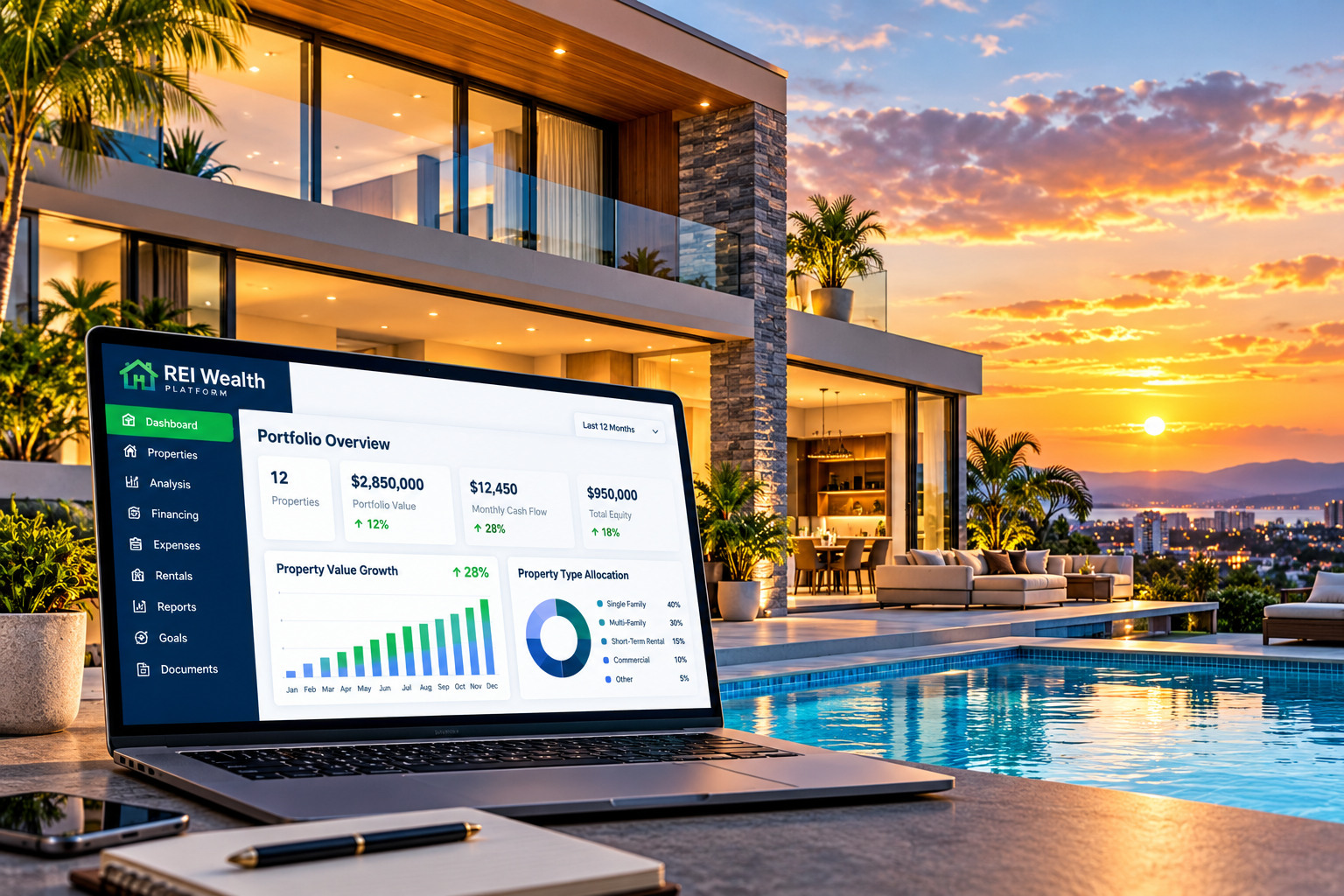
Track property values, loans, estimated equity, rental income and expenses in one private investor workspace.
Explore the Software →All Your Real Estate Loans in One Place
Explore financing options for acquisitions, refinances, renovations and construction.
Real Estate Investment Management Software for Everyday Investors
Real estate investment management software helps property investors organize their deals, rental income, operating costs, financing, and estimated returns. Instead of juggling spreadsheets for every rental property, investors can compare assumptions using consistent calculations and keep a clearer record of portfolio performance. Our real estate software brings educational tools, property tracking, and investment-financing resources together in one investor-focused experience.
Whether you are analyzing your first single-family rental or reviewing several properties, start with the numbers that affect your decisions: purchase price, financing, achievable rent, vacancy, taxes, insurance, repairs, management costs, and reserves. A good software workflow makes these assumptions visible so you can revise them as market conditions change.
Which Real Estate Software Programs Do Investors Need?
Different real estate software programs serve different users. Brokerage systems emphasize leads and transactions. Enterprise platforms often focus on institutional reporting. Property-management systems prioritize tenant operations. Individual investors and small landlords may need a simpler combination of property analysis, loan comparisons, income-and-expense tracking, and portfolio oversight.
| Software category | Primary purpose | Useful investor question |
|---|---|---|
| Investment analysis | Estimate cash flow, DSCR, cap rate and returns | Does this deal work under conservative assumptions? |
| Portfolio management | Organize properties, loan balances and estimated equity | How are my holdings performing together? |
| Rental management | Track rent, expenses and property-level records | What is each rental actually costing? |
| Financing research | Compare loan types and estimated payments | Which financing structure fits the property? |
For a closer look at evaluating a prospective acquisition, visit our investment deal analysis guide. If you already own rentals, explore our rental property portfolio software resource.
How to Analyze a Rental Property Before You Buy
Begin with gross scheduled rent, then deduct a realistic vacancy allowance to estimate effective rental income. Subtract operating expenses such as property taxes, insurance, maintenance, management, and any association dues to estimate net operating income (NOI). Debt payments are generally excluded from NOI, but they matter when calculating cash flow after financing.
For example, imagine a property collecting $2,500 per month in rent. If vacancy and operating expenses total $850 per month, estimated NOI is $1,650 per month. With a hypothetical monthly debt payment of $1,350, estimated cash flow before capital expenditures and income taxes is $300 per month. The simplified debt service coverage ratio (DSCR) is approximately 1.22 ($1,650 divided by $1,350). This is an illustration, not a quoted loan or a forecast; lender DSCR calculations and qualifying rents can differ.
Use the free rental property, mortgage payment and DSCR calculators to test higher expenses, lower rents or different interest rates. You can also review our cash flow calculation guide to understand which assumptions deserve the most scrutiny.
Track Rental Properties, Financing and Portfolio Equity
Investment decisions do not end at closing. Over time, rents, expenses, property values and outstanding debt can change. Tracking each property in a consistent format helps investors spot rising costs and identify which assets warrant a closer review. Our starter investor dashboard lets signed-in users record non-sensitive property and loan summaries. It is not an accounting system, bank connection, document vault or substitute for professional bookkeeping.
Estimated property equity is typically the estimated current value minus outstanding secured debt. That estimate may differ from realizable proceeds after selling costs, taxes or other obligations. Review valuations and loan balances periodically rather than assuming that an illustrative dashboard figure represents verified market data.
For additional context, read our real estate market research guide. The platform does not represent that it supplies live rents, property valuations or automated market feeds unless such data is separately identified and verified.
Explore Financing Alongside Investment Analysis
Financing can change an investment's cash flow and risk profile. A lower down payment may preserve cash reserves while increasing monthly debt service. A shorter-term bridge loan can serve a different purpose from long-term rental financing. DSCR programs may focus on property cash flow, while other loans may use different income, credit, property and experience requirements.
Compare acquisition, renovation, refinance and rental financing in our investment property loans resource and DSCR loan guide. Actual product availability, loan terms, pricing, licensing requirements and eligibility must be confirmed with the applicable lender or authorized lending professional. Calculators provide estimates only, not approvals or binding quotes.
How to Choose Real Estate Software for Your Investing Goals
Start by identifying your primary workflow: screening new deals, managing an existing rental portfolio, or understanding financing. Check whether a tool clearly explains its calculations and allows you to change important assumptions. For property tracking, look for a manageable data-entry process and transparent limitations. For financing, distinguish educational comparisons from live lender offers.
Also consider privacy and security. Do not upload Social Security numbers, tax returns, bank statements or closing documents into a basic tracking tool that has not been specifically designed and independently assessed for sensitive-document storage. Start with property-level summaries and use professional systems for regulated or sensitive records.
What Should You Check Before Choosing an Investment Property?
Before comparing real estate software programs, clarify the decisions you want the software to support. If you are buying a rental, verify whether the asking price and estimated rent support a reasonable cash-flow margin after financing. For an existing property, compare actual rent collections and expenses against the original budget. If you manage several rentals, organize the same data fields for each property so portfolio comparisons are meaningful.
How can I stress-test a real estate investment?
Start with a base case, then run a conservative scenario. Reduce expected rent, increase maintenance costs, and include a vacancy period. For example, a projected $300 monthly cash-flow cushion can disappear if expenses rise by $200 and effective rent falls by $150. The purpose of sensitivity testing is not to predict the future precisely; it is to understand how much uncertainty your investment plan can absorb.
What is the difference between cap rate, cash-on-cash return and DSCR?
Capitalization rate compares net operating income with property value or purchase price before financing. Cash-on-cash return compares estimated annual cash flow with the cash invested. DSCR compares qualifying property income with debt service, subject to the lender's calculation method. These measures answer different questions, so review them together rather than treating one number as a complete investment decision.
What records should a small landlord keep?
Keep organized records of rent received, property taxes, insurance, repairs, management fees, utilities paid by the owner, and debt payments. Track capital improvements separately from ordinary operating expenses, and reconcile totals with source documents. Software can help summarize these records, but tax classification and financial reporting should be reviewed with a qualified professional.
Frequently Asked Questions About Real Estate Software
What is real estate software?
Real estate software is a broad category of digital tools for evaluating, financing, operating and reporting on property assets. The right product depends on whether you are an investor, landlord, broker or property manager.
What does real estate investment management software do?
It helps investors assess deals, organize property and financing information, estimate returns, and review portfolio-level performance. Some systems also offer accounting or institutional reporting, but features vary by product.
Can I use real estate software to calculate DSCR?
Yes. A DSCR calculator estimates the relationship between qualifying property income and debt service. Lenders may use different definitions and adjustments, so the result should be treated as an initial estimate.
Is there free real estate software for rental property investors?
Our site provides free interactive investment calculators and a starter account for tracking property and loan summaries. Some advanced functions described elsewhere on the site may be planned rather than currently available.
Can investment software replace an accountant or property manager?
No. Software can help you organize calculations and property summaries, but it does not replace licensed advice, accurate bookkeeping, or hands-on property operations. Confirm which functions are actually available before relying on a product for critical tasks.
Does software guarantee profitable real estate investments?
No. Software can organize information and expose assumptions, but actual rental income, expenses, property values, financing costs and investment outcomes are uncertain.
Prepared by the RealEstateInvestingLoans.org Editorial Team
Our editorial team develops educational resources about real estate software, rental property analysis, portfolio management and investment financing. We aim to explain financial concepts in plain language, distinguish hypothetical examples from verified facts, and help investors compare options using transparent assumptions. This guide is educational and does not provide individualized investment, tax, legal or lending advice.
Our approach is to check calculations, identify important limitations and update explanations when meaningful information changes. Where financing terms, licensing rules or market statistics matter, readers should confirm current details with qualified professionals and authoritative sources. We do not claim that a particular loan, return or property outcome is guaranteed.
Editorial review: October 21, 2026 Publisher: RealEstateInvestingLoans.org Editorial Team
What Should You Verify Before Relying on a Software Projection?
Compare estimated rent with current local listings and actual signed leases where available. Verify taxes, insurance, HOA fees and financing terms instead of relying on default assumptions. Model a vacancy period, a major repair and a higher interest rate to see whether the property can still meet your goals. Keep a written record of each assumption and the date of the supporting source. Software makes these checks easier to organize, but it cannot replace independent due diligence.
Start with Your Next Investment Decision
Try the free analysis tools, review investor financing options, or create an account to organize your property information. Make decisions using realistic numbers, not guaranteed-return claims.